Knowledge in one place.
The data center landscape in Brazil is evolving rapidly. Once concentrated in global companies, the sector is undergoing a transformation driven by regional internet service providers (ISPs) seeking to diversify revenue.
With the average price of internet plans increasingly under pressure, many ISPs have begun investing in their own data center infrastructure, aiming to offer cloud computing, systems hosting, corporate backup, storage, and on-demand processing.
This strategy places ISPs on a new competitive edge, but also requires high-performance and reliable infrastructure — attributes that Datacom delivers through a portfolio ranging from the computing core to high-capacity optical interconnect.
The Four Pillars of Datacom Infrastructure for Data Centers
Building a modern data center requires consideration of performance, modularity, reliability, and scalability. Datacom offers integrated solutions across these four essential pillars: compute and storage, internal network, optical interconnect (DCI), and transceivers.
1. Compute and Storage – DM-SV Servers
Datacom's DM-SV line is designed to handle everything from enterprise workloads to high-density and large-scale virtualization environments. Based on the OCP (Open Compute Project) architecture, these servers deliver:
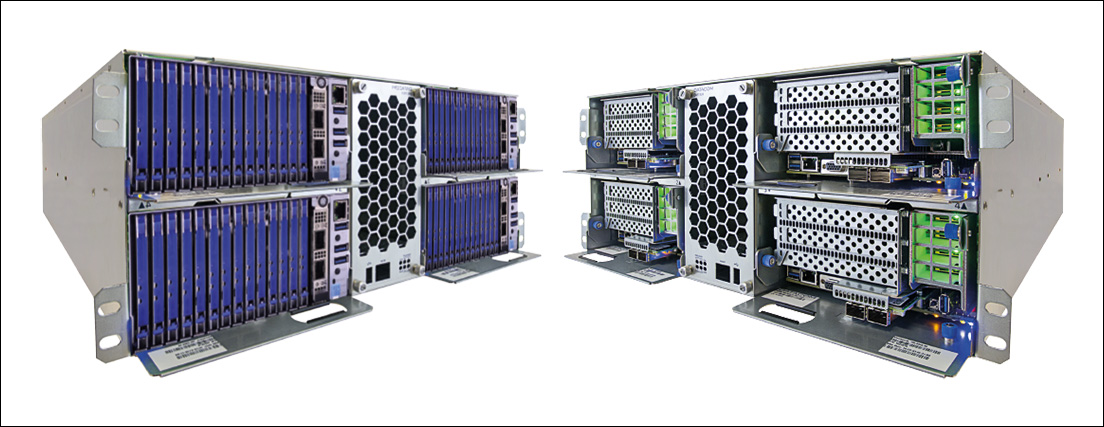
In scenarios that demand massive storage, it is common to use disaggregated architectures, combining servers and disk chassis (JBOD), integrated with distributed storage solutions such as Ceph, widely adopted in cloud and corporate backup environments.
2. Networking – Ethernet and IP/MPLS Switches
A data center's internal network is the heart of data traffic between servers, storage, and gateways. Datacom offers high-capacity switches capable of performing different functions within the Spine & Leaf architecture, ensuring:
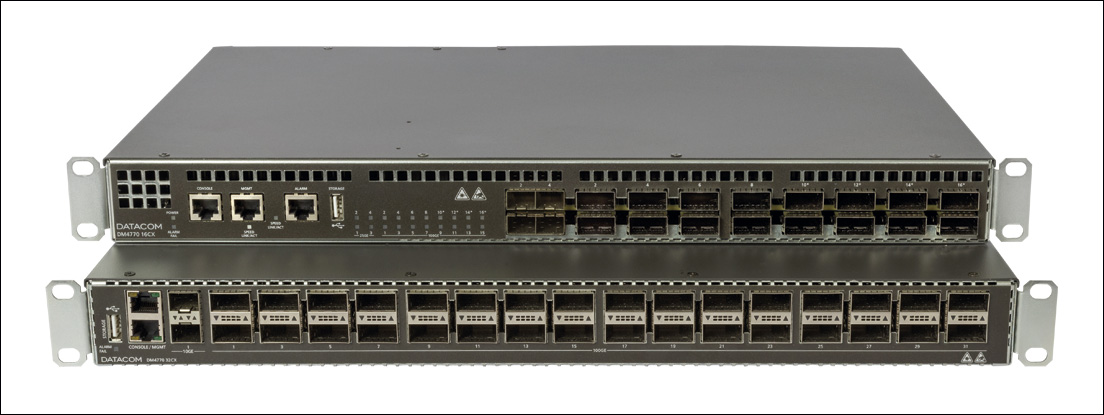
The DM4270, DM4770 and future DM4780 models can act as Top of Rack, Spine or Core IP/MPLS, providing design flexibility and direct integration with long-haul or carrier networks.
3. DCI – Data Center Interconnect with DWDM
To connect geographically distributed data centers or interconnect strategic PoPs, Datacom offers the DM4920 DWDM platform, ideal for Data Center Interconnect (DCI) and high-capacity optical transport.
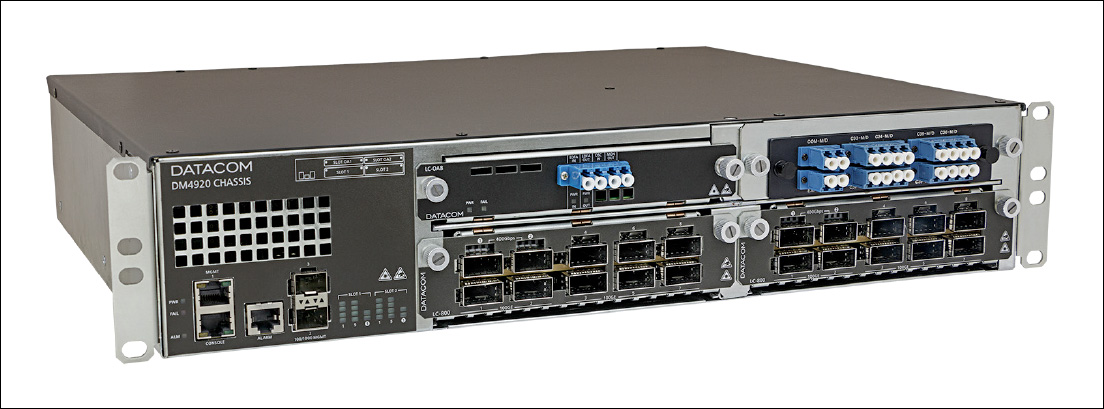
Main Features:
This set enables low-latency, high-availability, and scalable connections between data centers, supporting synchronous storage replication, disaster recovery, and cloud services backbone.
4. Transceivers – Connectivity at All Levels
Datacom transceivers are the link that ensures efficient integration between servers, switches, and DWDM systems, offering reliable performance and full compatibility with the brand's portfolio.
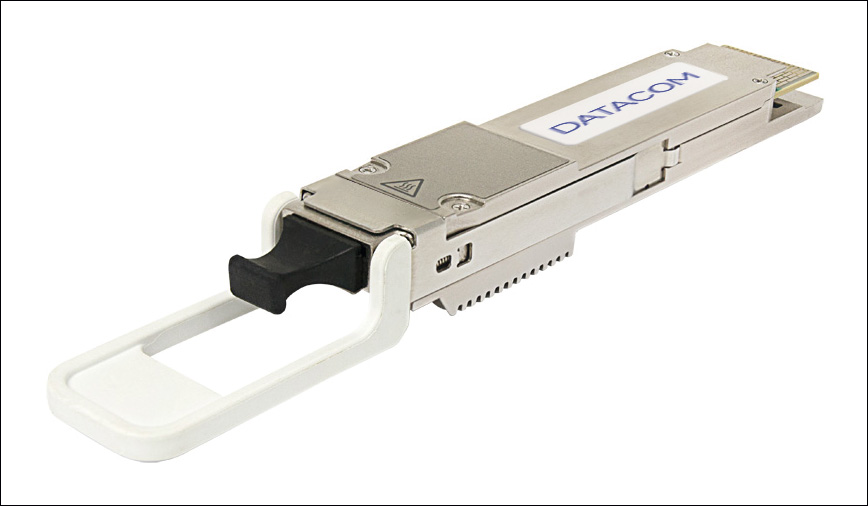
The line covers everything from short-haul applications, with multimode modules up to 100 meters, to long-haul scenarios, with single-mode models reaching up to 160 km.
The portfolio includes:
All models undergo testing and approval in the Datacom laboratory, ensuring consistent performance, interoperability and operational safety.
Benefits of Choosing Datacom
Conclusion
Whether your company wants to diversify its portfolio, Datacom's solutions offer the necessary foundation to build, expand, and operate modern data centers.
With performance, reliability, and local support, Datacom is a strategic partner for those seeking to unite computing, networking, and optical transport into a single, integrated vision.
Want to learn how to implement or expand your data center with local technology?
Contact our sales team.

Back to blog