Knowledge in one place.
The increasing digitization of services, real-time applications, and the need for low-latency experiences have led companies and service providers to rethink how IT infrastructure is distributed. In this context, the concept of edge data centers gains relevance by bringing data processing, storage, and intelligence closer to where they are generated and consumed.
Unlike large, centralized data centers, edge data centers are designed to operate in a distributed manner, meeting regional demands with greater efficiency, lower latency, and greater operational control. This model is especially strategic for regional providers, who gain autonomy over their infrastructure, reducing external dependencies and creating a solid foundation for offering new digital services.
In addition to performance and proximity, edge data centers require lean, reliable architectures prepared for continuous operation, focusing on high availability, energy efficiency, and ease of maintenance. It is in this scenario that solutions based on OCP servers and virtualization stand out, offering flexibility and standardization for distributed environments.
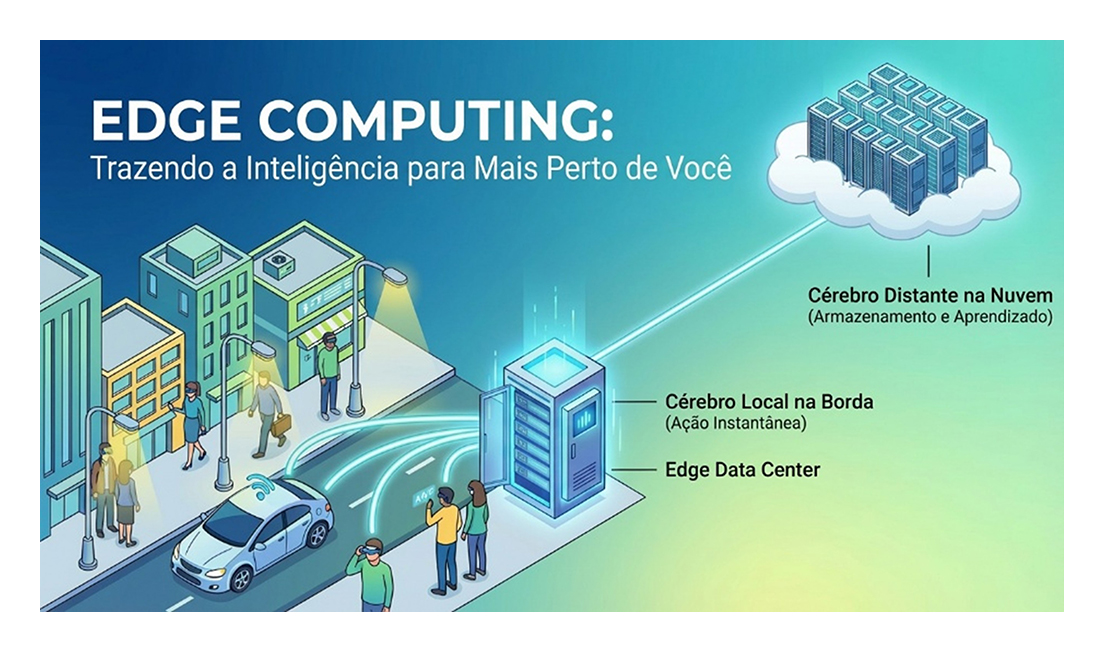
Nicnet structured its edge data center in the city of Cravinhos (SP), adopting a modern, robust architecture prepared for expansion, supported by OCP Datacom servers.
Nicnet's Edge Data Center
Nicnet is a provider that has been expanding its operations through consistent investments in its own infrastructure.
The infrastructure of Nicnet's edge data center was designed with a focus on high availability, scalability, and operational efficiency, adopting a modern architecture based on virtualization and software-defined storage.
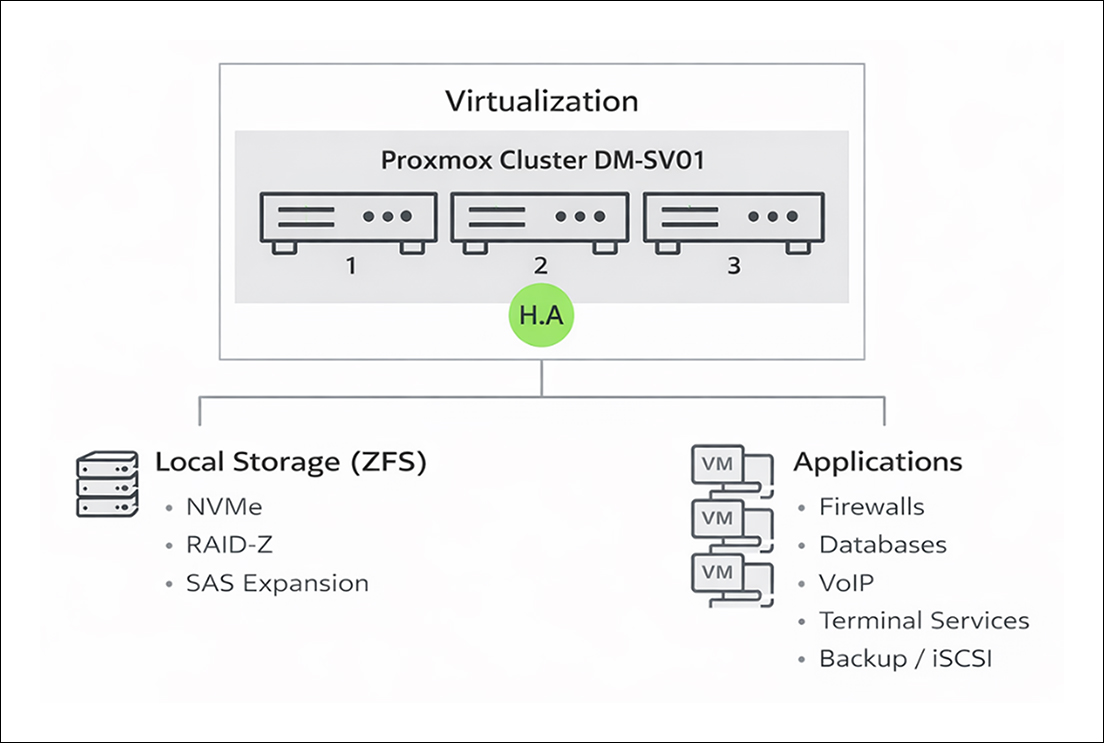
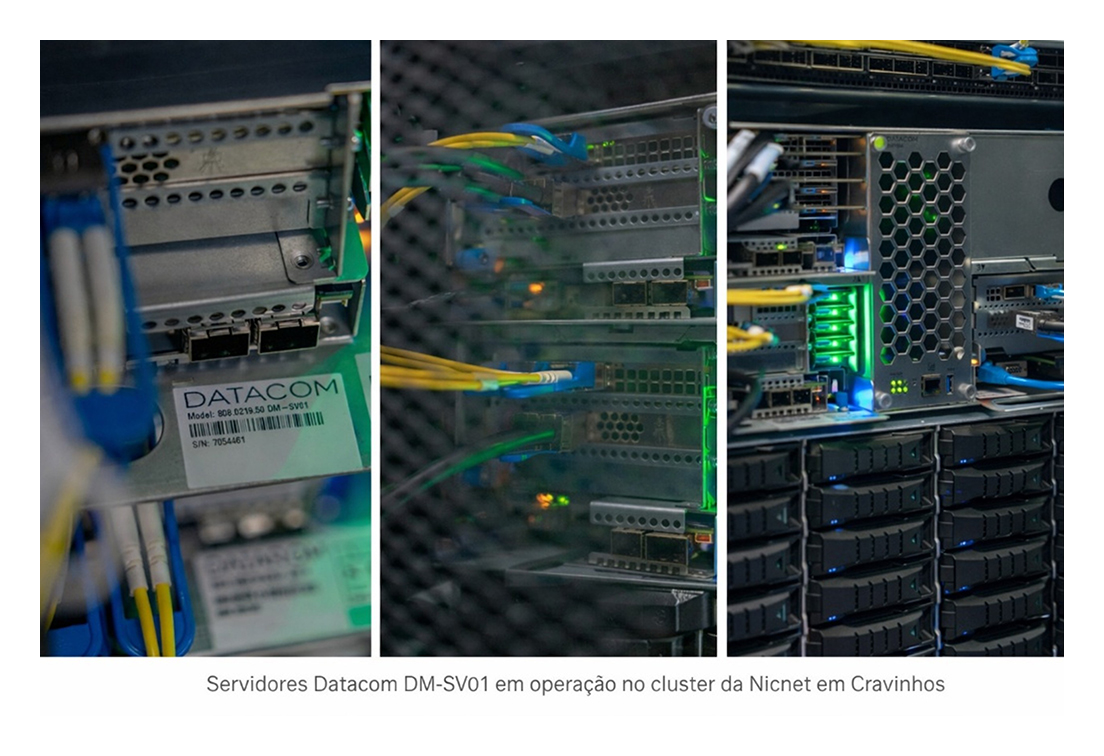
Currently, the environment has three Datacom SV01 servers, installed in the Cravinhos (SP) data center and operating in a Proxmox virtualization cluster, ensuring resilience and continuity of services even in hardware failure scenarios. This approach allows different workloads to be dynamically distributed, maintaining stable and predictable operation.
The servers host multiple operating systems, such as Linux, FreeBSD, and Windows, serving a wide variety of applications used by Nicnet's clients, including virtual firewalls, terminal services, databases, VoIP solutions, and block storage services, with the provision of iSCSI endpoints for remote backup routines.
In the storage subsystem, Nicnet uses local ZFS, combining high-performance NVMe disks organized in different topologies—such as mirrors, RAID-Z, and stripes—as well as magnetic disks connected via SAS expansion. This strategy allows for balancing performance, capacity, and reliability according to the profile of each application, without the need for a dedicated external storage system.
Within this environment, Datacom servers based on the Open Compute Project (OCP) standard play a fundamental role in the computing layer of Nicnet's edge data center. These servers offer important benefits for distributed environments, such as greater energy efficiency, better use of rack space, simplified maintenance routines, and ease of infrastructure expansion over time.
The adoption of OCP servers allows Nicnet to expand its environments in a modular way, replicating the same architectural model in new units, such as the data center in São Carlos (SP), maintaining standardization, operational predictability, and alignment with the best practices of modern data centers.
Customer Perception and Technological Partnership
According to Walter Kotani Yong Júnior, Network Engineering Manager at Nicnet, the experience with Datacom servers has been quite positive. The equipment has proven to be robust, reliable, and suitable for the demands of critical environments, in addition to having close and efficient technical support, important factors for the daily operation of the data center.
Also according to the manager, whenever a new infrastructure project is evaluated, Datacom is considered a strategic technological partner, contributing both to the choice of solution and to the design of the most appropriate architecture for each scenario.
Datacom as a partner in data center projects
Datacom acts as a technological partner in data center and edge computing projects, supporting clients from the definition of the architecture to the implementation and operation of the infrastructure. With a portfolio of OCP servers and solutions developed for critical environments, Datacom contributes to the construction of efficient, reliable, and future-proof data centers.
Companies interested in deploying or expanding their data centers can contact their Datacom account manager to evaluate architectures, discuss expansion scenarios, and receive support from the specialized technical team.

Back to blog