Knowledge in one place.
DWDM networks deliver high capacity, spectral efficiency, and flexibility for expansion. However, operating the optical layer requires attention to several parameters: channels, links, amplifiers, power, OSC, Mux/Demux, and coherence between elements. Traditionally, much of this configuration is done via command line, which demands experience and increases provisioning time.
In August 2025, we presented on our YouTube channel the planned evolution for DmView in managing the DM4920 platform. At that time, we showed how the software already allowed monitoring and configuration of equipment and anticipated an important step: the creation of DWDM circuits through a guided graphical experience.
With the release of DmView 11.7, this evolution becomes a reality. The new version significantly expands the DWDM management experience, offering end-to-end circuit provisioning directly in the web interface, with intelligent validations and integrated visual diagnostics.
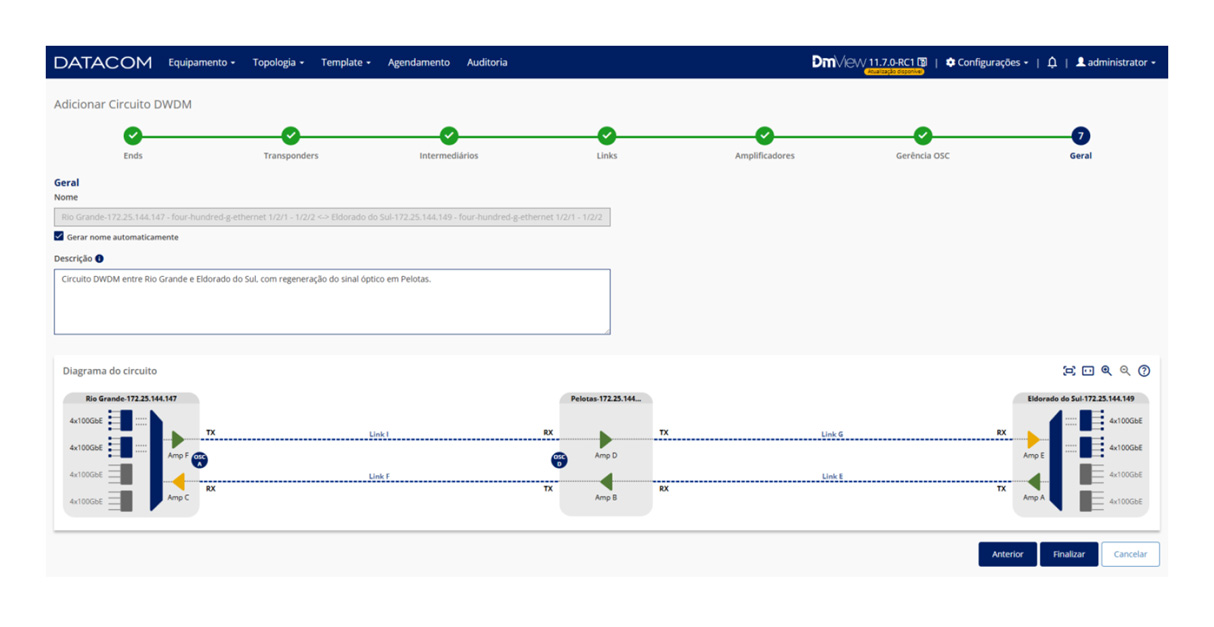
From Equipment Management to Circuit Management
DMView already offered a solid foundation for supervision, inventory, alarms, templates, and automation. Version 11.7 raises this level by incorporating a DWDM circuit-oriented operational model.
Instead of thinking exclusively about the individual configuration of each piece of equipment, the operator now works from an end-to-end circuit concept. Provisioning occurs through a structured, step-by-step wizard, in which the circuit is assembled visually and progressively. As elements are selected, the diagram is dynamically built, offering clarity on the topology and reducing the risk of inconsistency.
This approach brings direct gains in productivity and standardization, as well as minimizing human error during the activation process.
Guided DWDM Provisioning in DmView 11.7
DmView 11.7 allows for end-to-end provisioning of optical circuits with an intuitive and validated workflow.
Available features include:
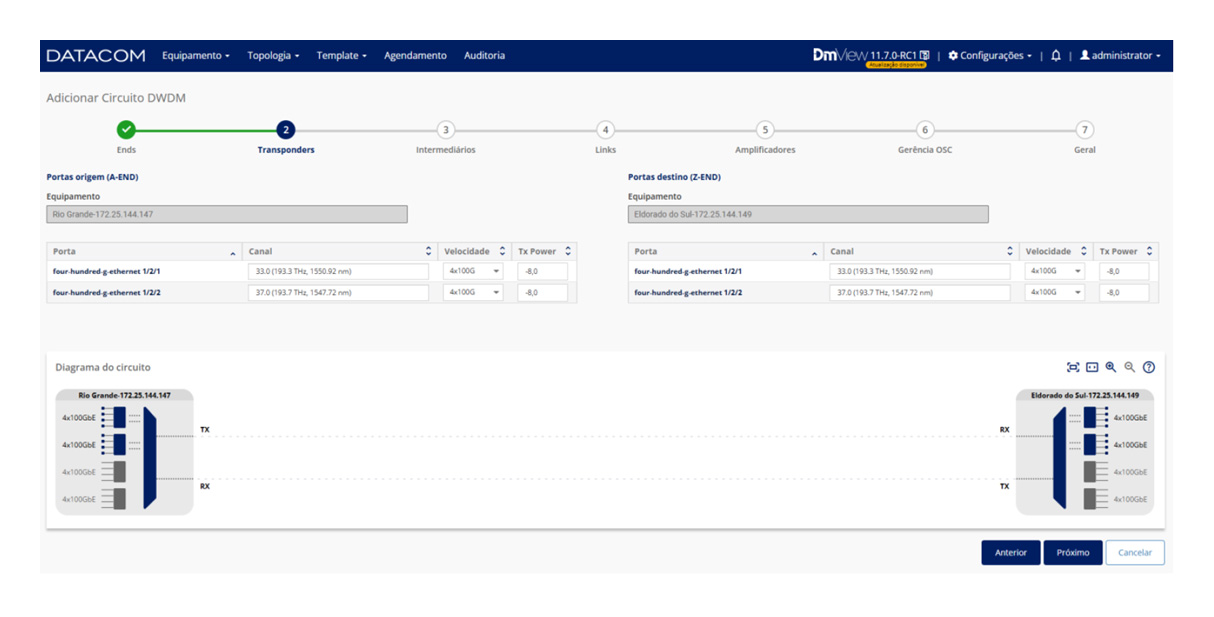
The system incorporates validations that prevent incompatible combinations between equipment, ports, channels, and links. Furthermore, resources used by a circuit are protected against improper reuse, reducing conflicts between simultaneous operations.
Visual Diagnostics and Detailed Circuit Analysis
Managing a DWDM circuit doesn't end with provisioning. The ability to quickly diagnose the behavior of the optical layer is fundamental to maintaining service quality.
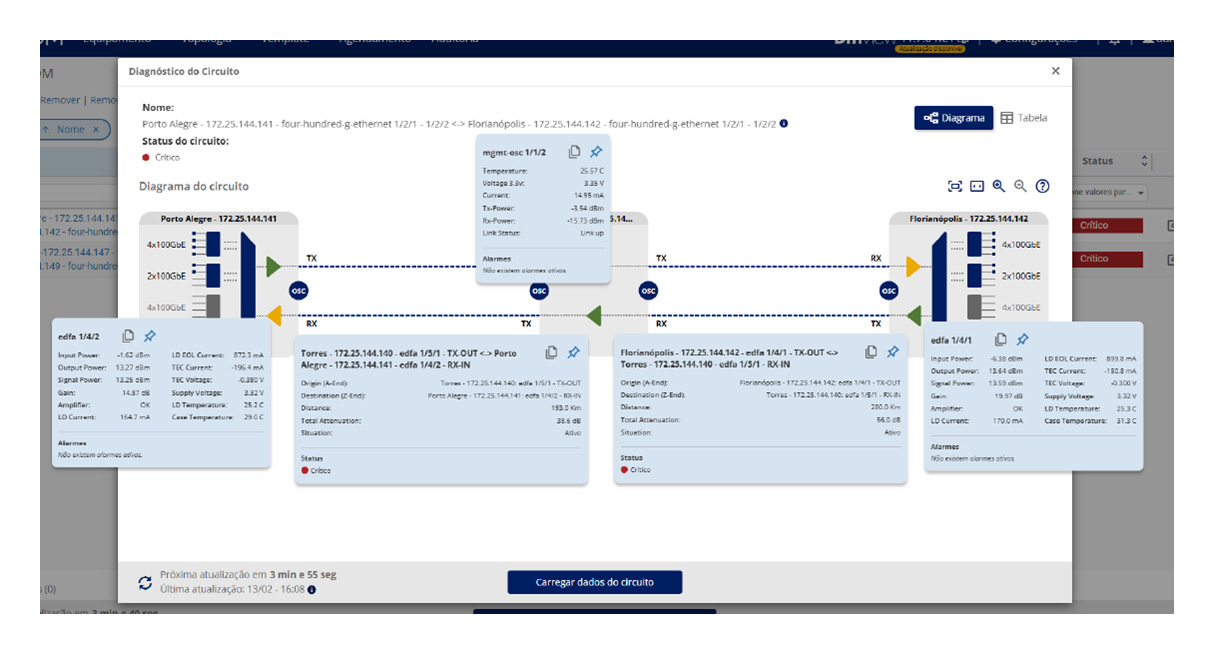
DmView 11.7 offers diagnostics through an interactive diagram, where the operator can view detailed information by hovering the cursor over each circuit component. For example, for EDFA ports, available data includes input and output power, amplifier gain, operational status, current, temperature, and associated alarms.
In addition to the diagram, information is also organized into specific tables by component type, such as transceivers, amplifiers, OSC management, links, and alarms. The system also presents the consolidated circuit status, which represents the circuit's health, automatically calculated based on the status of the main elements involved.
Complete Optical Infrastructure Modeling
To ensure accurate circuit representation, DmView 11.7 also expands its optical infrastructure modeling capabilities.
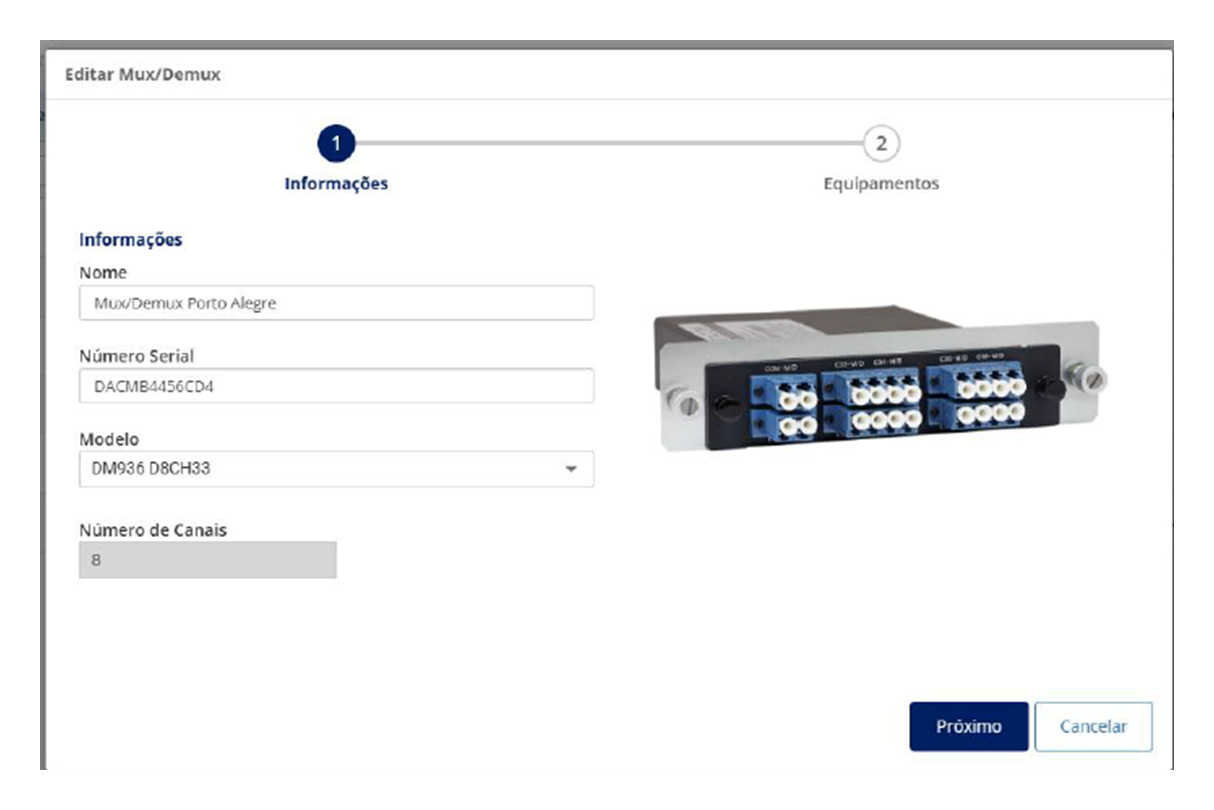
The new version allows for the creation, editing, and removal of Mux/Demux directly in the web interface, associating them with DWDM equipment and registering relevant information such as model and serial number.
Furthermore, the system supports the creation and management of dedicated optical links for DWDM, including parameters such as distance and attenuation. Each port can be associated with two distinct links, considering the transmission (Tx) and reception (Rx) directions, making the model more aligned with the operational reality of optical networks.
This structure facilitates both guided provisioning and subsequent diagnostics.
Governance, Permissions, and Auditing
DWDM environments often involve multiple operators and teams. Therefore, governance and traceability are essential aspects.
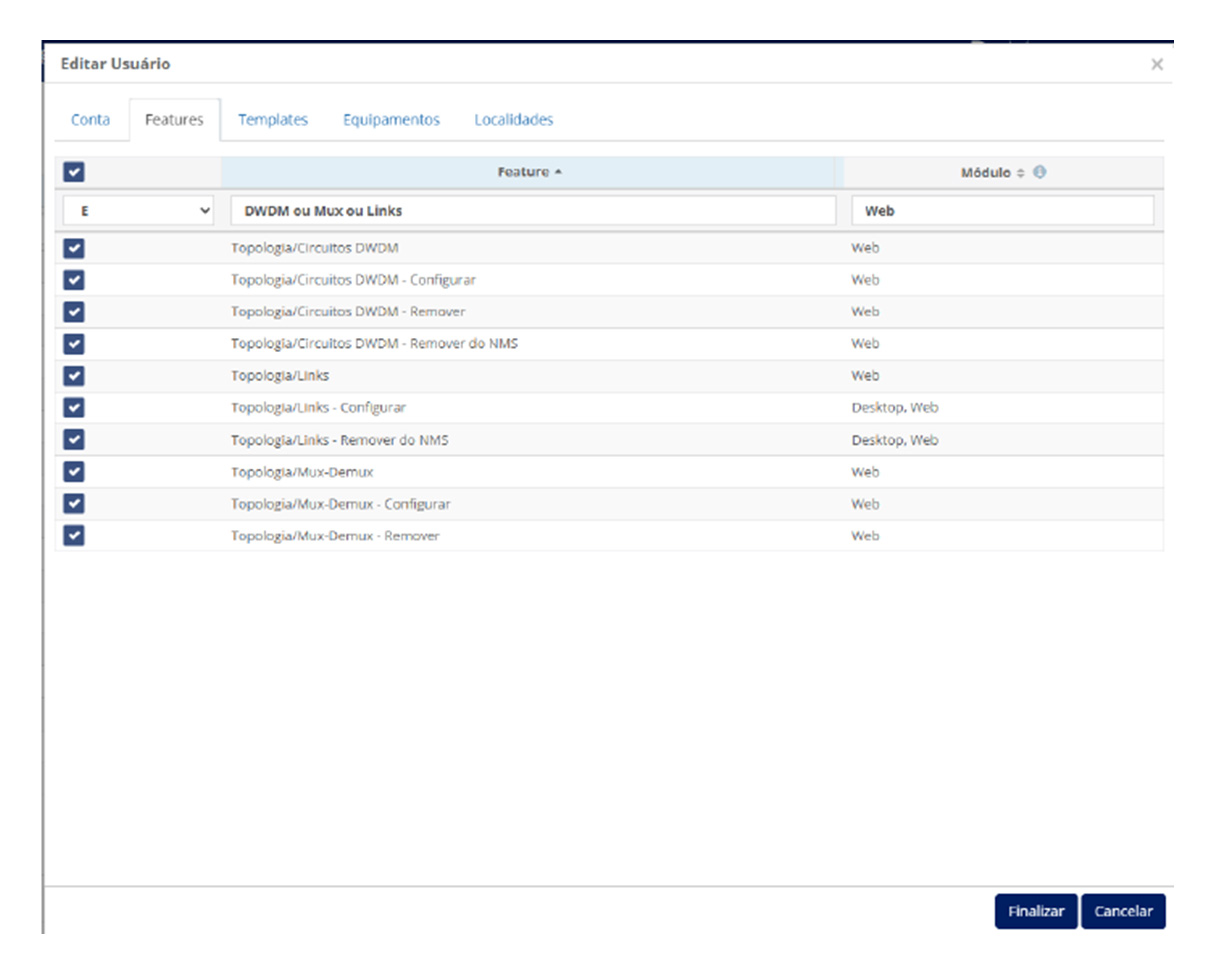
DmView 11.7 maintains complete auditing of operations performed on the web interface, recording actions executed, commands sent, responsible user, date, time, and access origin. It is also possible to define granular permissions by user or group, controlling which operations can be performed by each profile.
This level of control contributes to greater operational security and alignment with internal network management policies.
Continuous Evolution of the DM4920 Platform
The DM4920 platform was designed to meet the needs of high-capacity networks, whether in metro, regional, or data center interconnection environments. With DmView 11.7, the optical layer operating experience evolves consistently with this goal.
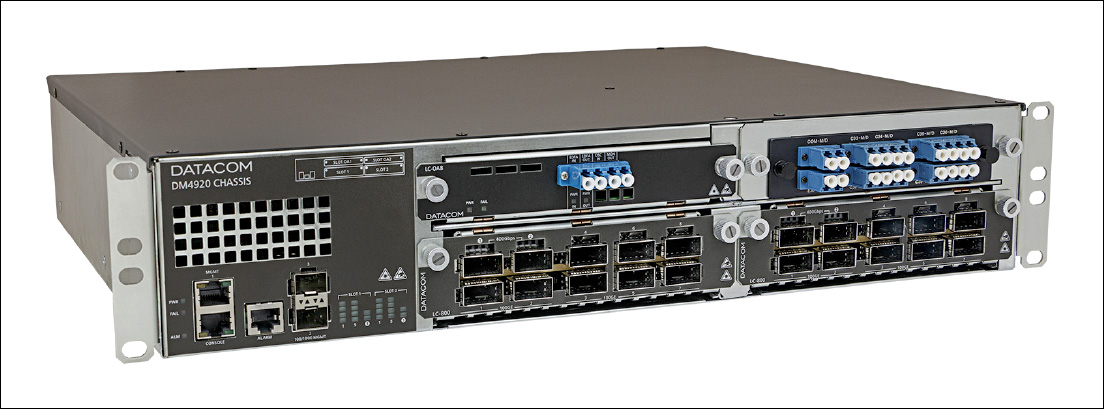
The combination of guided provisioning, intelligent validations, visual diagnostics, and governance reinforces Datacom's commitment to the continuous evolution of the DWDM platform. More than just adding functionalities, it's about simplifying operations and delivering tools aligned with the real needs of engineering and operations teams.
To learn more about how DmView 11.7 can optimize the management of your DM4920-based DWDM network, contact the Datacom team and request a demonstration.

Back to blog